



Introduction
I would say my anthropoetry journey began in 2018. I was fresh off the heels of my first solo ethnographic fieldwork excursion and working on my masters thesis following my return to the United States after nearly 3 months in small-town Guatemala. As my coursework ended and I was left to complete the analysis phase of research, I was working with a lot of complex questions and sitting with my own complex web of emotions.
Even as I researched the concept of “Maya” identity and reviewed my interview transcripts to see what answers they provided to my questions of post-colonial constructs of indigeneity, I wrestled with separate questions of my own place in our modern sociocultural landscape. What did it mean for my personhood, as a queer Black American, as I toggled between the social systems of the United States and the social systems of a Central American nation actively recovering from the effects of US political meddling? I sat with wonderings of how to identify the exact moments and circumstances in which I crossed a threshold from member of oppressed marginalized classes to member of the globally privileged elite. These questions were not necessarily directly relevant to my research questions about indigenous women and their own navigation of globalized economic systems, but they were not completely unrelated either. Musings on the real-time shape-shifting nature of identity was at the core of it all. As I have done since my pre-teen years, I instinctively turned to poetry to help me capture the elusive heart of my identity questions.
In poems that remain in my private notebooks, I wrote about the wave of new feelings and perspectives triggered by my fieldwork and literature research. I wrote about my return to the metaphorical “closet” as I traveled alone to a community where sexual and gender queerness are largely unaccepted. I wrote about being considered average height (or even sometimes tall!) for the first time ever. I wrote of my renewed positive outlook on life after experiencing a volcanic eruption that didn’t turn out to be as descructive as it could have been...
During that period, poetry offered me a form of analytical processing that was never offered in my methodology courses or IRB training. Although the poems are nowhere to be found in my resulting thesis nor in other publications, the self-reflection and relationship mapping I conducted through poetry was a critical step in analyzing and contextualizing the mass volume of new information I was left to process as a 20-something year old graduate student.
Ever since, I have initiated several projects to explore and expand this practice of integrating poetry into the qualitative research process. This guide is one of the ways I have chosen to proceed with this work.
In developing The Anthropoetry Field Guide, I have enlisted the support of Jason Vasser-Elong as an academic and educator familiar with both ethnographic research and classroom instruction within and beyond the university. I first had the privilege to collaborating with Vasser-Elong when I interviewed him as part of programming for the American Anthropological Association’s 2025 annual conference.[1] During that interview, Vasser-Elong asserted
[Anthropoetry], to me, is the art of interpreting humanity from your own lived experience. A poem forces you to look at your own experience in relation to what you’re reading, and it becomes a different conversation.
Those words describe my post-fieldwork poetry practice exactly. I was interpreting a specific facet of humanity through reflection on my relationships with various collectives of humans.
This interpretation work was not the reserach product itself, but it was a critical step toward producing a quality research project.
Through the guide, Vasser-Elong and I articulate the purpose and procedures for deploying poetry in anthropological research and education. Throughout the guide, all references to “we” or “our” should be understood as the shared perspectives of both myself and Vasser-Elong. Our respective chapters are authored soley by us as individuals, with input from the other.
Our aims in elaborating the concept of anthropoetry and advocating for its recognition as a valid research methodology are to:
unite sociocultural researchers in a cohesive working theory of poetic practice in qualitative research
offer researchers an expanded toolkit for structuring and navigating dialogue among participants and personal reflection, especially in projects centered on sensitive subjects
include non-researchers (i.e. everyday people) in the framing of sociocultural research data as those data become formalized in the canon of human sociocultural knowledge
The remainder of the guide is dedicated to outlining a historical trajectory of the use of poetry in social research across time, proposing a functional framework for anthropoetry, and offering examples and exercises to help the reader leverage anthropoetry in the future.
Poetry as Narrative History
The use of poetry to document and recount the collective human experience is an ancient practice. The Epic of Gilgamesh, Buddhacharita, the Ramanyana, the Iliad, the Odyssey—all epic poems composed to preserve pivotal happenings in a society’s history and educate new generations on that history. Of course, epics are far from strictly factual history lessons. Epics are unreliable as primary literature sources for professional researchers for four main reasons:
Contested authorship
Authorship by individuals who did not actively witness the recounted events
The presence of supernatural, mythical beings
Varying iterations as the poems are orated in real time by a bard
Despite their unreliablity as factual documentations of historical events, many epics maintain strong influence in shaping historical perspectives and cultural identity among everyday people.[2][3]
Rather than debate the factuality of historical poems, we instead recognize why the tales presented in epic poems tend to receive more enthusiastic engagement with everyday people than history textbooks and researcher logs. Opposite the flat tonality of an academic history book, poetry can “express [a] historical argument, while infusing an emotive perspective often beyond the scope of historians.”[4] That emotive perspective serves as a directive to audiences, answering any potential questions of how one ought to think and feel about the narrative at hand.[5] The difference between a murderous leader being perceived as a war criminal or an admirable hero often rests on the affective elements of storytelling. Especially when accompanied by music, costumes, and symbolic visuals, a poetic performance holds the power to command an acceptance of the narrator’s truth that audiences would have to work actively and diligently to resist.
As cultural anthropology developed across the 20th century, its practitioners appear to have understood this potential of poetry and attempted to unlock it in a variety of ways.
Poetry as Anthropological Account[i]
From Questionable Depiction
Perhaps the most adamant creative writer among cultural anthropologists in the 20th century is Zora Neale Hurston. Her legacy remains the site of an ongoing debate about the locus of the line between general cultural narrative and true anthropological research. In her time, Hurston penned dozens of poems, screenplays, and folk tale collections, the vast majority of which relied on Hurston’s ethnographic research in the American Deep South and Carribean to inspire their content. As Hurston persisted in developing creative reproductions of African diasporic lifeways, she became increasingly rejected by contemporary anthropologists who were pressing for anthropology to be taken seriously as a empirical science. This included losing support of Franz Boas, founder of the four-field approach to anthropology and the anthropology department at Columbia University, who served as Hurston’s initial doctoral advisor.[6]
At the heart of the debate about whether Hurston’s work qualifies as “anthropological,” is the question of how to practice ethnography. The exact details of what constitutes “culture writing” within anthropology as a discipline, and how that culture writing can satisfy scientific standards continue to be negotiated to this day. Many modern cultural anthropologists have tempered Boas’ demand for anthropological accounts that present an empirical “truth” about culture with a recognition that the humanity of the researcher will inevitably color any testimony or narrative about other humans. In the pivotal work Writing Culture: The Poetics and Politics of Ethnography, James Clifford writes
Even the best ethnographic texts—serious, true fictions—are systems, or economies, of truth. Power and history work through them, in ways their authors cannot fully control. Ethnographic truths are thus inherently partial—committed and incomplete. This point is now widely asserted—and resisted at strategic points by those who fear the collapse of clear standards of verification. But once accepted and built into ethnographic art, a rigorous sense of partiality can be a source of representational tact.[7]
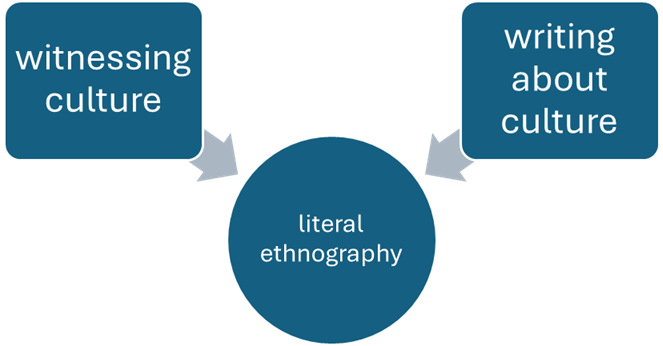
Figure 1: Simplicity of Literal Ethnography
It is here that versimilitude, a mutually recognized iteration of truth, not an asserted objective truth, reveals itself as a shared core feature of literary narrative and qualitative research[8]
The act of taking great care in courteous and sincere depictions of sociocultural happenings is the goal of analytical culture writing.[9]
Although aspects of Hurston’s work do remain questionable, what Boas and other contemporary critics declined to recognize were the ways in which her work did (stragetically and with great care) engage in versimilitude to present the realities of the African diaspora to Western audiences that routinely and intentionally ignored anything associated with Black races. For example, Hurston faced criticism from other Black American writers that the vernacular style used in her pieces depicted a embarassing caricature of Blackness.[10] However, her rationale for using such language appears to center anthrpological linguistics:
If one listens closely one will note too that a word is slurred in one position in the sentence but clearly pronounced in another. This is particularly true of the pronouns. A pronoun as a subject is likely to be clearly enunciated, but slurred as an object. For example: “You better not let me ketch yuh.”
...I am mentioning only the most general rules in dialect because there are so many quirks that belong only to certain localities that nothing less than a volume would be adequate.[11]
For at least some portion of her career, we can say with confidence that Hurston was striving to offer sincere reproductions of the Africanized English vernaculars she encountered in her ethnographic reserach in the creative products she offered to audiences upon her return to the United States.
As modern anthropologists, we likewise concern ourselves with representations of social collectives and happenings that sincerely and tactfully capture the essence of what we have observed. In fact, evidence demonstrates that tact is mandatory at all stages of research for ethically producing ethnographic truths, especially when a researcher is eliciting information from participants on a sensitive or traumatic topic.[12] Additionally, poetry is a proven tool for tactful elicitation on tough topics as it offers safe vulnerability.[13] The guide serves as a playbook for researchers to use poetry throughout each phase of the sensitive, high-stakes work that is qualitative research. Building upon the efforts of ethnographers like Hurston, we aim to standardize poetic practice in ethnography in-part to reduce the likelihood of claims of harmful extraction, misrepresentation, or misinterpretation from researched communities.
We assert that cultural anthropology, as a discipline, has ample space for creative writing to operate in the creation and analysis of sociocultural data. We also asert that the strategic deployment of creative writing in qualitative research need not prevent the research from meeting standards of empiricism demanded of social sciences.
Toward Representational Tact
Most poetry collections written by anthropologists about their work and experiences as anthropologists are creative interpretations of one or more of the following:[ii]
Data gathered from semi-structured interviews and casual conversations with research participants
The researcher’s personal fieldnotes detailing their daily reality during the fieldwork phase
The researcher’s personal reflections on the entire research process
This guide strives to bring the disparate variations of anthropological poetics into an organized assembage termed anthropoetry. We regard anthropoetry as a branch of “new” ethnography, dedicated to the craft of “creative narratives shaped out of a writer’s personal experiences within a culture and addressed to academic and public audiences.”[14] Likewise, we recognize that others have worked to parse the differences between terms such as “poetic ethnography,” “ethnographic poetry,” and “ethnopoetics.”[15] to detail the function of poetry in anthropological research. We propose the term “anthropoetry” as an umbrella term for all of the aforementioned concepts (and other concepts at the intersection of anthropology and poetry) to remain inclusive of all anthropologists who may run studies with qualitative elements and/or use poetry to process fieldwork, but who are not specifically ethnographers (e.g. medical anthropologists). We also, secondarily, aim to include qualitative researchers beyond the four fields of anthropology in the broader conversation on methodology and presentation.
What follows in the guide offers a framework for maximizing the potential of poetry in each of the above data engagement modes and additional ways to engage with poetry as social interpretation. We hope that this publication will serve as a direct-action step forward in the broader conversation about what anthropology ought to do and whom it ought to serve in its means and ends. We eagerly anticipate any dialogue and innovations that may influence future publications on anthropoetry and new iterations of this guide.
Welcome to the anthropoetry movement!! Click below get notified when the full guide releases in November 2026!
[1] Williamston, 2026
[2] Honko, 1996
[3] Beidollahkhani, 2024
[4] Godsell & Mathebula, 2025
[5] Thompson et al., 2005
[6] Rivero, 2024
[7] Clifford & Marcus, 2010, p. 6
[8] The Poetry Foundation, n.d.; Creswell, 2013, p. 54
[9] Ingold, 2018; Fortun, K., 2020
[10] Wright, 1937
[11] Hurston, 1934
[12] Feldman, 2026
[13] Nyfoors et al., 2025; Kassab et al., 2026
[14] Goodall, 2000 p. 9
[15] Maynard & Cahnmann-Taylor, 2010
[i] The guide is primarily focused on cultural anthropology as it is practiced in the United States. The term “anthropology” as used throughout this guide refers primarily to cultural anthropology, and only loosely to the other 3 fields of American anthropology. The guide does not take the practice of anthropology in other nations (e.g. “British archaeology”) into account for the offered frameworks.
[ii] We understand and recognize that anthropologists from all four fields of American anthropology write poetry regarding their research and experiences, and that poetics are not limited to cultural anthropologists. We hope to provide a detailed literature in a future edition of the guide that features work from archaeologists, medical anthropologists, linguists, and cultural anthropologists alike.
Bibliography
Beidollahkhani, A. (2024). Myth and epic as a non-religious revival of national identity; the role of Ferdowsi’s Shahnameh in the development of secular national identity among Iranian minorities; studying Persian Twitter. National Identities, 26(5), 521–539. https://doi.org/10.1080/14608944.2024.2372597
Clifford, J., & Marcus, G. E. (2010). Writing Culture: The Poetics and Politics of Ethnography. University of California Press.
Creswell, J.W. (2013). Qualitative Inquiry & Research Design (3rd ed.).
Feldman, M. (2026). Which Research Methodology for an Exploratory Study on a Sensitive Political Issue, Involving a Vulnerable Population? Ethics and Social Welfare, 1–9. https://doi.org/10.1080/17496535.2026.2684774
Fortun, K. (2020). Foreword to the 25th Anniversary Edition Of Writing Culture, 2020. In Writing Culture: The Poetics and Politics of Ethnography (Anniversary ed., Kindle). University of California Press.
Godsell, S. & Mathebula, Z. (2025). Poetry as a site of history education and exploration: learning history from and with poetry. History Education Research Journal, 22(1), 23. https://doi.org/10.14324/HERJ.22.1.23.
Goodall, H. L. (2000). Writing the New Ethnography (Ser. 7). AltaMira Press.
Honko, L. (1996). Epics along the Silk Roads: Mental text, performance, and written codification. Oral Tradition: Epics along the Silk Road, 11(1), 1–17. https://mospace.umsystem.edu/server/api/core/bitstreams/fab82475-6d09-4d6a-acd0-ec6b7fea66bd/content
Hurston, Z. N. (1994). Characteristics of Negro Expression (1934). In Within the Circle: An Anthology of African American Literary Criticism from the Harlem Renaissance to the Present (pp. 79–95). essay, Duke University Press.
Ingold, T. (2018, September 8). Anthropology between art and science: An essay on the meaning of research. FIELD. https://field-journal.com/issue-11/anthropology-between-art-and-science-an-essay-on-the-meaning-of-research/
Kassab, A., Jayatunge, R., & Bou Khalil, R. (2026). The therapeutic functions of poetry in Mental Health: A systematic review and meta-analysis. Psychiatry Research, 356, 116897. https://doi.org/10.1016/j.psychres.2025.116897
Maynard, K., & Cahnmann‐Taylor, M. (2010). Anthropology at the edge of words: Where poetry and ethnography meet. Anthropology and Humanism, 35(1), 2–19. https://doi.org/10.1111/j.1548-1409.2010.01049.x
Nyfors, M., Pöyhiä, R., Vehviläinen, A. R., & Lamminmäki, A. (2025). Writing connections as a source of significance: group poetry therapy among patients with advanced cancer. Journal of Poetry Therapy, 38(4), 355–367. https://doi.org/10.1080/08893675.2024.2391425
Poetry Foundation, The. (n.d.). Versimilitude. The Poetry Foundation. Retrieved August 2026, from https://www.poetryfoundation.org/education/glossary/verisimilitude.
Rivero, K. (2024). Zora Neale Hurston’s recorder. Modernism/Modernity , 9(2). https://modernismmodernity.org/articles/rivero-zora-neale-hurston-recorder
Thompson, W. F., Graham, P., & Russo, F. A. (2005). Seeing music performance: Visual influences on perception and experience. Semiotica, 2005(156), 177–201. https://doi.org/10.1515/semi.2005.2005.156.203
Williamston, A.-D., & Vasser-Elong, J. (2026, April 7). Interpreting humanity: The transformative power of anthropoetics. Sprouts. other. Retrieved September 1, 2026, from https://sproutedseedsmedia.medium.com/interpreting-humanity-the-transformative-power-of-anthropoetics-d2fe6238bd1b.
Wright, R. (1937). Between laughter and tears. New Masses, 25(2), 22–25. https://www.marxists.org/history/usa/pubs/new-masses/1937/v25n02-oct-05-1937-NM.pdf